
If you adopt any of these OER, please let us know by filling in this form.
-
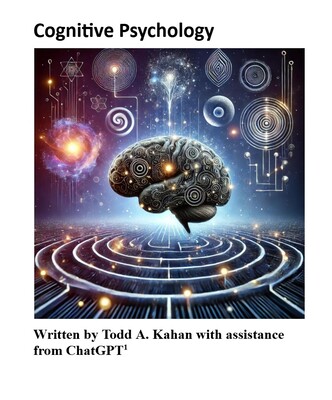
Cognitive Psychology
Todd Kahan
Cognitive Psychology is an introductory college-level textbook that examines the mental processes that allow humans to acquire, store, manipulate, and use information. The book focuses on the core concepts and theoretical distinctions that have shaped the field of cognitive psychology, introducing students to the classic experiments and frameworks that continue to influence contemporary research on human thinking.
Beginning with an overview of the cognitive approach and the distinctions cognitive psychologists make when studying the mind, the text then traces the flow of information through the cognitive system, from the earliest stages of sensory memory, through pattern recognition and attention, to short-term, working, and long-term memory (with separate chapters devoted to episodic and semantic long-term memory). The book concludes with an introduction to language and psycholinguistics.
Throughout the text, emphasis is placed on foundational studies, experimental logic, and theoretical debates that define the field. Rather than attempting to catalog every contemporary finding, the goal is to help students understand how cognitive psychologists ask questions, design experiments, and build explanations of mental processes that are still relevant today.
-
Making Sense of East Asian Languages
Keiko Konoeda, Linh Hoang, Geizuo Mahai, Nary Phon, Georgia Green, Ana Grieve, and James Soifer
In Winter 2026, the Bates College Asian Studies course “Making Sense of East Asian Languages” launched this open collection of supplementary readings. This collection helps students of Chinese and Japanese explore the histories behind the languages they study. Often, language courses focus on mastering a "standard" version without looking at its context. These readings bridge that gap.
Each entry investigates how certain language varieties became the national standard and what happened to other varieties and languages that were left out. By looking at these historical and colonial contexts, the collection helps students understand the power dynamics that shape language today. By sharing these as open materials, we hope to make these complex topics easier to access.
This is Version 1.0 of a living document that will be expanded by future generations of students at Bates College.
-
The Biochemistry of Gene Expression
Sam Scola, Liam Yardley, Blessing Ajayi, Enathe Muhawenimana, Yuka Enkh-Orgil, Aiman Hasan, Maia Schifman, Conor McGuckin, Vova Sosnovskii, Sam Caplan, Gianna Ferrara, Aleisha Martinez Sandoval, Lexi Inger, and Kate Lee-Gilligan
Students in the Winter 2026 course, Chemistry 401: Biochemistry Research: Prokaryotic Gene Expression, wrote chapters for an open access textbook that could be used to understand the biochemistry of various aspects of gene expression and regulation in bacteria. They worked in small groups, created their own images using ChimeraX and other software, and peer-reviewed each other's work. This is a work in progress and future students will continue to iterate on these chapters and add additional content.
-
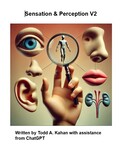
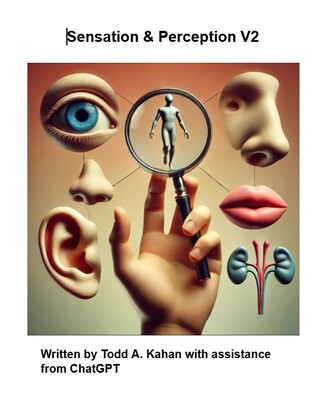
Sensation and Perception V2
Todd A. Kahan
Sensation and Perception V2 is an introductory college textbook that explores how we detect and interpret sensory information from the world around us. Covering all five major senses—vision, audition, touch, taste, and smell—the book provides a comprehensive overview of the biological and psychological processes that underlie perception. While all sensory modalities are discussed, the primary emphasis is on vision, tracing the flow of visual information from the moment light strikes the retina through the complex mechanisms that allow us to perceive objects, color, motion, and depth.
-
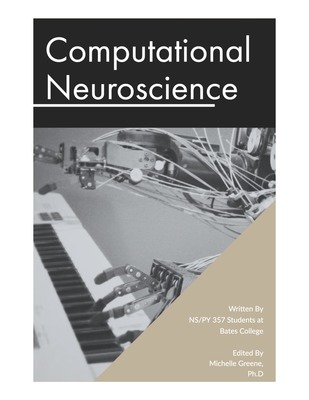
Computational Neuroscience
Michelle Greene and NS/PY 357 Students
In Fall 2019, the Computational Neuroscience class at Bates College collaborated to begin an open textbook. Eight students across three majors collaborated to present the content they were learning to students who were similar to themselves. This project serves both pedagogical and social goals. By writing for fellow students, we leveraged the power of teaching for learning. By bringing together students of diverse academic backgrounds, we leveraged the power of peer instruction. Finally, by writing in the open, students not only brought their best work forward, but are working to contribute to an open knowledge environment that democratizes information. This is version 1.0 of a living document that will be extended and revised over the course of several generations of students.